
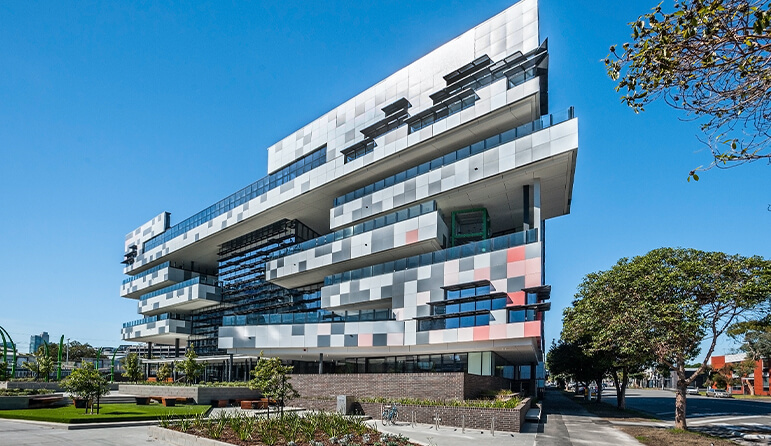
Wallbridge Gilbert Aztec (WGA) aren’t mucking around with their engineering and project management. They’re winning awards. They’re running offices in Adelaide, Darwin, Melbourne, Perth, Whyalla and New Zealand. They’re over 450+ staff strong. And WGA’s consulting services including structural, civil, maritime, mechanical, geotechnical, heavy lifting, temporary works, project management, electrical, pressure vessels, hydrogeology and demolition.
Yuh. It’s a lot. It’s impressive. It was exhausting just writing that list. So, when we were lucky enough to steal a few minutes with WGA director Cameron Jackson, we were all over it, like they are on engineering.
As one of the founding employees in their Melbourne office, Cameron’s been with WGA for 22 years (not coincidentally, that’s also how long WGA have been using Synergy software). “The company started in Adelaide back in 1981” Cameron says, “I came to Melbourne when they bought out a small firm — at that point there were four or five of us in this office.”
That’s some impressive growth, in our humble opinion, and Cameron says that a lot of it has happened in the last few years.
Big, beautiful, and bounteous — becoming an integrated business
“We’ve had fairly linear growth over time, but the last two and a half years has seen a spurt. In the Melbourne office we’ve branched out into more infrastructure-style work and industrial work, mimicking what we do in Adelaide.
“Adelaide’s business is substantially bigger than Melbourne’s, it’s about 180 people. And it’s made up of three distinct areas — buildings, infrastructure, and what we call our industrial section.
“With me being a structural and building engineer, Melbourne has predominantly been a buildings practice up until two and a half years ago. We seconded a couple of people from Adelaide to build the infrastructure side, the industrial side, and also the project management side of the business — which is chiefly to do with defence work.”
A great day at work for Cameron is still when he actually gets to do some engineering. However, he says that’s become more of a rarity due to the numbers. “Managing an office of 65 people, it becomes more and more problematic over time. We’ve grown in Melbourne, from about 35 to 65 in just over two and a half years.”
There’s no calculator around here, but you don’t need one to know those numbers are niiiiiiiiice. We cheered Cameron on to tell us about WGA’s experience migrating from Synergy desktop practice management software to Synergy cloud.
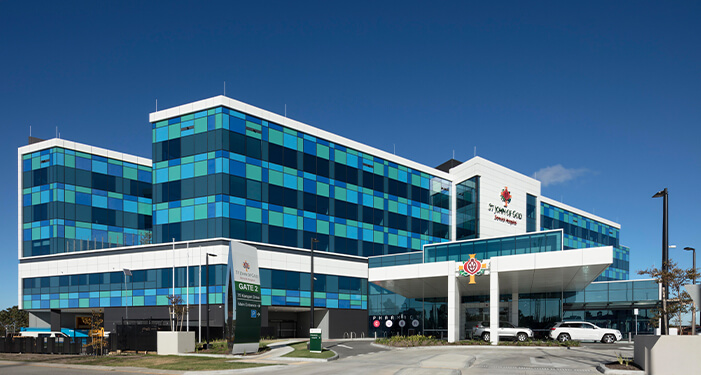
Integrated built environment business, baby
“We migrated simply because we’ve become more of an integrated business and we needed Synergy cloud to support that,” says Cameron. “We’d been planning the migration for 12 months before we actually did it.
“Probably the biggest benefits we saw in Synergy cloud against the legacy software was the interface from a resourcing, budgeting, and forecasting point of view. We found Synergy cloud was a lot more user friendly in those areas, and being a business now of more than 350 nationally, the forecasting side of things became a lot more prominent in our requirements.”
As it became a more complete, more unified built environment business, WGA needed a business and project management software that enabled that evolution.
While they historically used the on-premises version of Synergy mostly to raise invoices and manage time, Cameron says Synergy cloud is proving to be exactly what they needed — a cloud platform. Software that brings everything, and everyone, from anywhere, at any level of seniority, together — and allows them to connect the other key software they use. Ultimate integration. Jackpot.
Up, up, and away! Using the Synergy cloud platform to elevate all your AEC software products
Asked about whether Synergy cloud fits the needs of an organization with WGA’s size and complexity, Cameron says Synergy cloud does everything they need it to do.
“The key thing that we’re starting to find now is the ability to utilize the Power BI and the API output — being able to disseminate, not just the information from Synergy, but from our HR product, our accounting product, so that we can give and create dashboards that will enable our project leaders to run even more efficiently.
“We’ve also been using Mail Manager for almost as long as we’ve used Synergy, so the new integration between the two is really exciting.”
WGA used their shift to Synergy cloud to update a lot of their office procedures at the same time.
“Things like generating invoices, management of project leaders’ time, management of the projects themselves from a time point of view — was all really done as an interface with our accounts team in the old version, whereas the cloud version allows the project leaders to go in and do a lot of that functionality themselves without a great impact on their productivity.”
More project management autonomy with fewer admin hours? Sounds like a 10 to us.
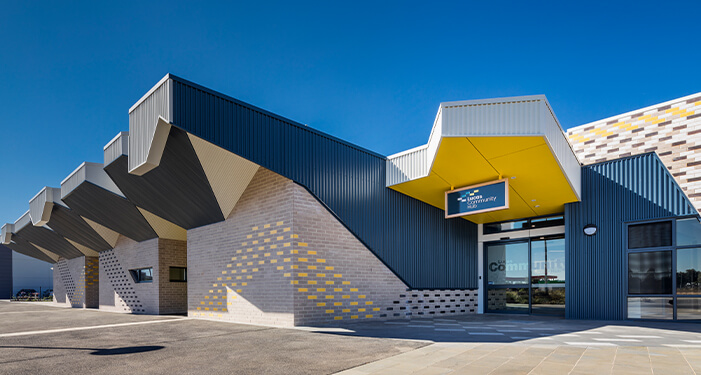
Future’s so bright — a software that responds to our industry’s needs
From a resourcing perspective, Cameron says that WGA’s biggest challenge as a national organization, is developing systems that enable utilization of the downtime of people in different offices. For Synergy, developing a resourcing and planning module to meet the specific needs of built environment businesses means continuous consultation with industry.
“There’s not really a program out there that does the entire job, but Synergy is going that way — and being part of its development will enable us to utilize it to the betterment of our organization in distributing workload across the nation.”
To that end, the murmurs of Synergy’s upcoming Kanban interface has WGA excited.
“The final piece in the jigsaw puzzle that I see, from a resourcing point of view, is the Kanban interface — which we got a little preview of the other day and seems headed in exactly the right direction for our purposes. But you know, one of the things I enjoy about being a Total Synergy customer is that while you’re developing these things, you’re actually running it past us, consulting with real architecture, engineering, and construction design firms, to see what we think. So what we’re seeing with each new release is functionality that’s actually important and useful to us.”
Customer success team brings WGA’s success
We asked Cameron what cemented WGA’s decision to migrate to Synergy cloud, and in this, as with most other things, Cameron seemed clear and considered (again, this lot aren’t messing about!).
“One of the things that pushed us over the line to go to Synergy cloud from the legacy product — rather than to another program — is the fact that we can actually deal on a day-to-day basis with Total Synergy. We’ve got that access and the access to support, even after hours, is incredible.
“Most of the time I spend dabbling in report writing is done after hours. And [UK-based customer success manager] Apinya’s online then, so you get help from her whenever you need.”
The fact that Cameron’s regard for our CS team is only matched by our own does bring a warning from him. “I don’t think our team has fully realized the help they can get from the help desk as yet. There’s a few that have, but not everyone has. God help you when 350 of them start accessing it all at one time!”
Bring it on, WGA — we’re ready!