

How does a busy international specialist engineering consultancy make sure its business is always on track? We checked in with someone very well-placed to answer that question — Sam Liptrott, director (London) at consulting engineers OFR Consultants.
OFR Consultants’ clients include owners, designers and builders for private, commercial and public sector works. Founded in Australia in 2011, the UK office opened in Manchester in 2015 and now has offices in London, Edinburgh, Glasgow, Bath and Bicester with 40 employees and growing.
The UK office has as many as 150 active projects at a time that Sam and his fellow managers need to be on top of. A system that helps give visibility into the real state of progress is critical. One of its most intriguing current projects is helping design what will be Europe’s largest office block when completed — the new Google headquarters at Kings Cross.
A vital construction role
All building projects must comply with safety legislation and regulatory benchmarks. The problem is that the rules associated with those standards can be difficult to interpret and, if applied uncritically, can restrict a building’s design.
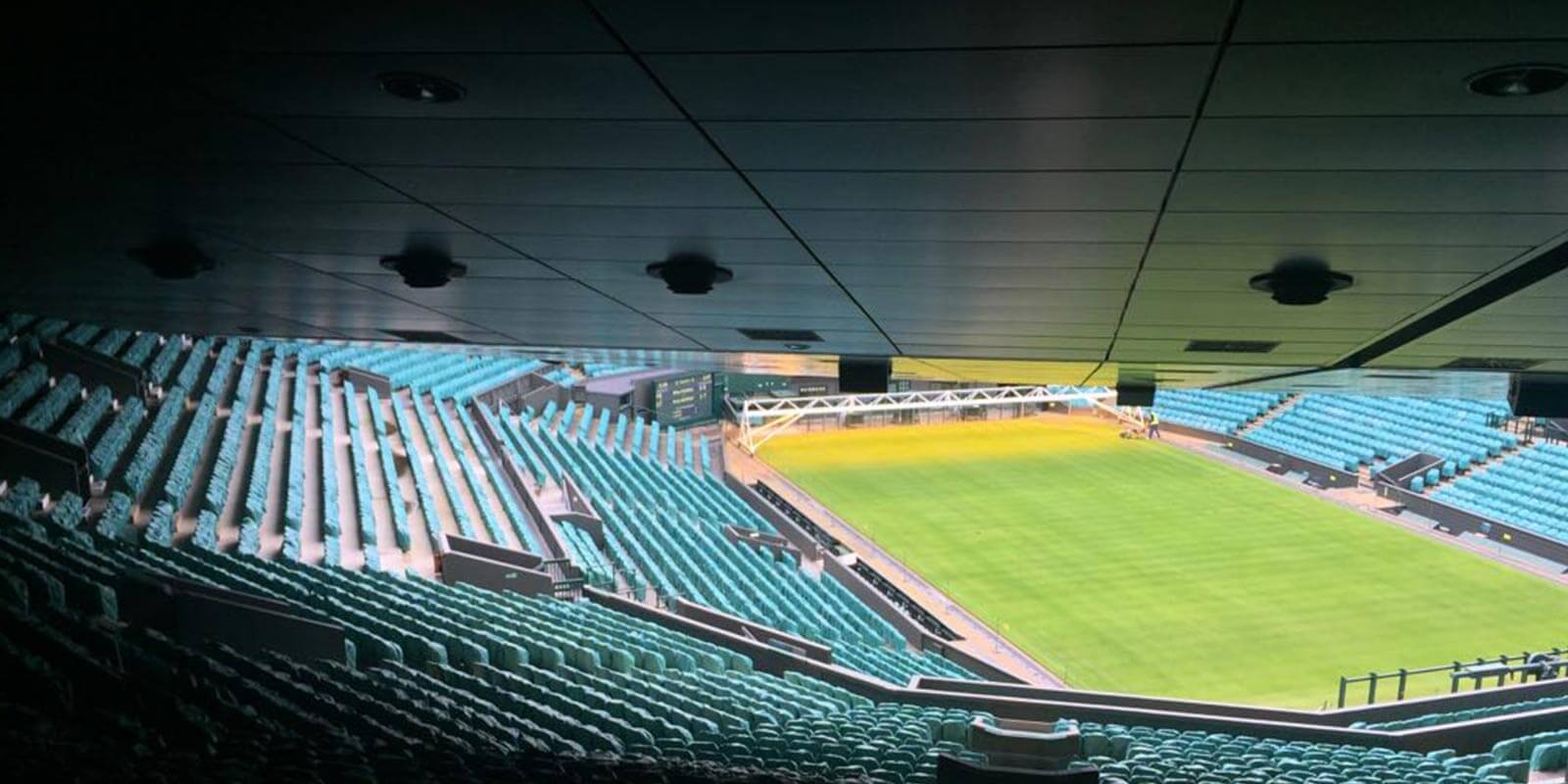
The firm’s primary focus is on reducing risk. It offers services ranging from building regulations advice, expert witness support, computational modelling, fire systems’ specifications to strategic operational fire advice. Around 65 percent of its work is in design phase and 35 percent in post-completion.
Recently, landlords’ focus has sharpened following the Grenfell Tower tragedy, so OFR’s expertise is much in demand.
“People are much more switched on about proper fire safety management than they were before,” Liptrott said.
Home and abroad
Sam has 20 years’ experience delivering projects in the UK and internationally — he started out as a commissioning engineer in the nuclear industry.
“This meant I got to learn how to handle design problems at the sharp end,” he said.
“I then moved into fire safety. My approach is delivering practical, performance-led design based on facts and reason, rather than assumptions and doing what was done before.”
Coming from a background of big multidisciplinary, multinational corporates and consulting firms, Sam found that systems and processes for things like finance and project management were robust but rigid and not easy to use.
“Most start with a database and add functionality over the years, like timesheet and expense-management,” he said.
“With multiple systems like that, you have multiple logins —security and password management turns into a real nightmare. What’s great about Synergy is that it’s all there in one place and much easier to manage.”
A true Synergy fan, Sam said he tries to do as much in the software as possible.
“It’s our project accounting tool but also a customer relationship management platform,” he said.
“Then it’s what we use to do budgeting. It helps us keep in touch with key clients and maintain the relationships that a firm like us really needs. It’s also our expenses system, and the way we track engineer time against projects, progress against spend…”
In fact, the package seems to dovetail quite perfectly with his job which is, as he sees it, “to know how far along we are in the design”.
“With Synergy, I can see at a glance if there is the remaining budget available given how far along the project has progressed. I can see when, say, 50 or 75 percent of the budget is nearly spent.”
Sam has to oversee a great deal of work and it can be a challenge for him to keep track of it all. The thing he is the biggest fan of in Synergy is the ability to ‘helicopter’ work.
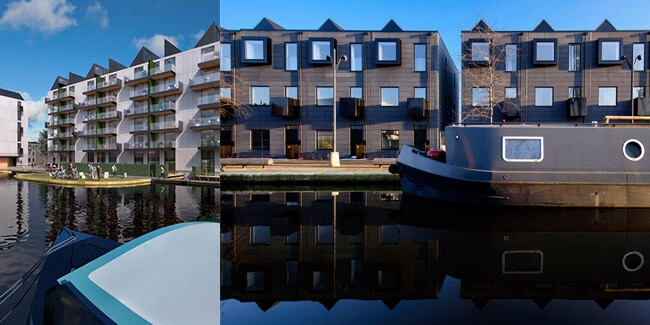
“We have so many active projects going on, but they are all at different stages of completion. It would be really hard with the old-style corporate systems to be able to ‘fly low’ and see how individual projects are progressing, but also hover up a level and see how things are going in a more macro sense.
“At the same time, I can see how we’re faring regionally, where we are with cash flow right now, how profitable projects are across the board, and find any areas where cash is coming in too slowly. This is a fantastic way to see overall performance.
“It’s the depth of easily accessible information across multiple projects at various stages of completion that I get. I like things that are intuitive and give me something useful back, and both of those statements are true of Synergy,” he said.
Sam also uses Synergy as part of the process of bringing newer employees up to speed on how the business works.
“We can tailor permissions so junior staff can get to understand the finance on a project without seeing the actual cost behind the billable hours of colleagues — which would give away their salaries. That means they have a chance to learn how things work on their own.”
The business also makes use of a finance engine, Xero, which Sam says is great but lacks granularity.
“I can’t zoom in on an individual project so easily to get a sense of profitability,” he said.
“It’s more for giving us the headline numbers, the overall profit and loss situation. That means if there is an issue, it’s a lot harder to spot the source of the malaise than it would be if we didn’t also have Synergy.”
When push comes to shove, Sam said Synergy’s main benefit is allowing him and his colleagues more time to “build amazing buildings”.
“We want to spend our time making sure buildings work and are safe. The less time we spend on admin and number crunching, the better,” he said.
“And that’s what Synergy gives me.”