
Most project issues don’t appear overnight.
A phase runs a little hot, a few hours go unrecorded, or a resourcing gap opens up mid-project. On their own, these issues can seem minor, but if they’re not identified early, they can quickly affect project profitability.
That’s where project management reporting makes the difference.
Rather than simply reporting on completed work, good reporting gives A&E leaders the visibility they need to spot risks early, make informed decisions, and keep projects on track before problems become expensive.
The firms doing this well aren’t generating more reports for the sake of it. They’re using the right data, at the right time, to make decisions they can actually act on.
Why Project Problems Often Go Undetected Until They Impact Profitability
Many project issues aren’t discovered until it’s too late to change the outcome.
According to the 2026 Architecture Industry Benchmark Report and the 2026 Engineering Industry Benchmark Report, scope creep is the primary cause of budget overruns, with more than half of firms reporting that at least one in four projects exceeds budget. The real question is when those firms realise there’s a problem.
In most practices, the answer is too late. Time is entered at the end of the week, financial reports are produced monthly, and project managers are focused on delivery rather than analysing performance. By the time the numbers reveal an issue, the project’s margin has already been affected.
Disconnected systems make this even harder. Many firms still track project performance across a mix of spreadsheets, email threads, and disconnected tools. Finance sees one version of a project’s status, but the project team sees another. Leadership sees a summary that’s already weeks out of date by the time it lands.
Project reporting doesn’t prevent every issue, but it helps firms identify problems early enough to take action.
Key Project Health Metrics A&E Leaders Should Monitor
Not all data is useful data, and the goal shouldn’t be to track everything. Firms just need to track the right things consistently.
Budget Consumed vs. Work Completed
If a project has used most of its budget while only delivering part of the agreed scope, it’s a clear sign that intervention may be needed. Getting this right depends on time being recorded accurately and promptly, not batched at the end of the week. Total Synergy’s time tracking captures hours at the project and phase level as work happens, so budget consumption is always based on what’s real.
Utilisation Rate
Utilisation rate sits at the heart of capacity planning, yet more than 50% of firms still manage resources manually using spreadsheets or meetings. This makes it difficult to understand who’s available, who’s overloaded, and where future capacity issues may arise.
Realisation Rate
Realisation rate is a widely undertracked metric: understanding how much recorded time is converted into billed and collected revenue helps firms identify opportunities to improve project profitability.
WIP (Work in Progress)
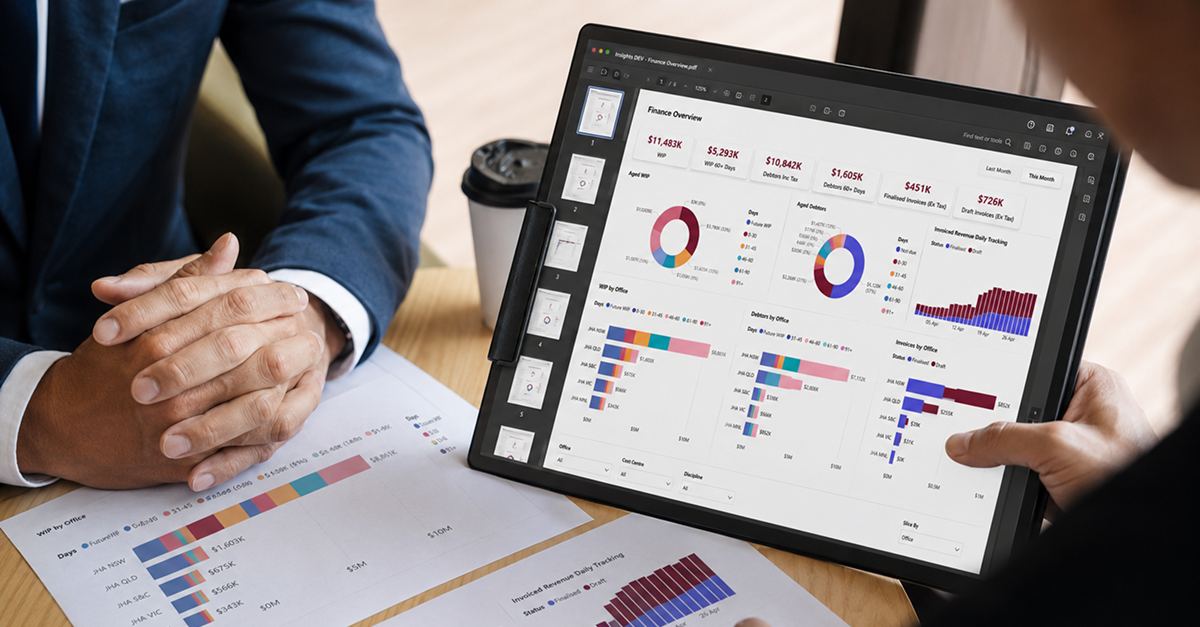
Unbilled work accumulates when billing milestones are missed or invoicing is delayed. High WIP relative to your pipeline can signal a cashflow problem building in the background, or a billing pattern that’s out of step with the pace of delivery. Having proper financial tracking tools in place that provide a live view of WIP can make all the difference here.
The right project management platform makes these metrics available automatically, giving leaders the information they need without relying on manual reporting.
How Project Reporting Helps Identify Risks Before They Escalate
Early risk identification is one of the most valuable benefits of project reporting. However, it only works if reports reflect what’s happening now, not what happened several weeks ago.
The traditional monthly reporting cycle is too slow for this. By the time a report lands in a principal’s inbox, it may already reflect decisions that were made, or missed, weeks ago.
Project managers need visibility into project budgets, upcoming resource requirements, and scope changes as work progresses. Firm leaders need a broader view of project performance across the business so they can identify trends, compare profitability, and focus attention where it’s needed most.
When project, financial, and resource data are connected, staying informed takes far less effort. With better insights available automatically, teams can be more proactive, rather than wasting time preparing reports.
Why Forecasting and Resource Visibility Improve Project Decision-Making
Good project management reporting looks beyond current performance to help firms plan for what’s ahead.
Retrospective reporting tells you what happened. Forecasting tells you where you’re headed. That distinction matters when you’re trying to manage outcomes, not just document them.
Revenue forecasting based on real-time project data, provides a more accurate view of future income and supports better financial planning and visibility. Similarly, resource visibility is just as important. Understanding who is available over the coming weeks allows firms to identify potential bottlenecks, rebalance workloads, and avoid delivery issues before they occur. Resource allocation tools give firms that view across the whole portfolio, not just project by project.
Forecasting doesn’t eliminate uncertainty. It replaces guesswork with a structured view of where things are likely to land, which can be a significant improvement for leaders trying to run a project-based practice with confidence.
How Leading A&E Firms Use Project Data Proactively
Leading A&E firms use reporting as an ongoing management tool, not simply as a way to review completed projects.
Reactive firms use reports to explain what went wrong, and proactive firms use them to avoid that conversation altogether.
This shift doesn’t happen overnight, but there are consistent patterns in the firms that get there.
Time recording is used as a financial function, not just a billing input. When timesheets are completed accurately and on time, every downstream report improves. Budget tracking becomes reliable, WIP balances reflect reality, and forecasts are grounded in effort, not estimates. Getting this right starts with how your firm manages projects at the phase level, not just across the portfolio.
Leading firms also review project health data on a regular basis, not just at billing milestones. A weekly or fortnightly review of key metrics, even a brief one, is enough to catch most problems while there’s still time to act. The review doesn’t need to be complicated, it just needs to happen consistently. Project data is also used to guide conversations with project managers and clients before issues become major risks.
Most importantly, these firms rely on connected systems that bring project management, financial reporting, and resource planning together in one place.
With everyone working from the same information, decisions become faster, more consistent, and more proactive.
How Total Synergy Gives A&E Leaders Earlier Visibility Into Project Risks
With complete project visibility, firms can identify risks earlier, improve forecasting, allocate resources more effectively, and make better decisions before issues affect profitability.
Total Synergy is purpose-built for A&E firms and has support teams in Sydney and London. It brings together project management, project financials, and project analytics in a single platform, which means the data driving reporting comes from the same source as billing, resourcing, and financial planning.
If your firm is still finding out about project problems after they’ve already affected profitability, it’s worth asking whether your current tools are giving you the visibility you need, or whether the information is arriving too late to make a difference.
Book a demo to see how Total Synergy helps A&E practices get ahead of project risks before they become problems.