
Are you curious as to how your firm stacks up in the market? The 2026 Architecture Industry Benchmark Report reveals key insights about the industry, as well as challenges firms need to stay on top of.

The 2026 Architecture Industry Benchmark Survey drew responses from architecture practices across Australia, the United Kingdom, New Zealand, and beyond, with Australian firms making up 65% of the cohort.
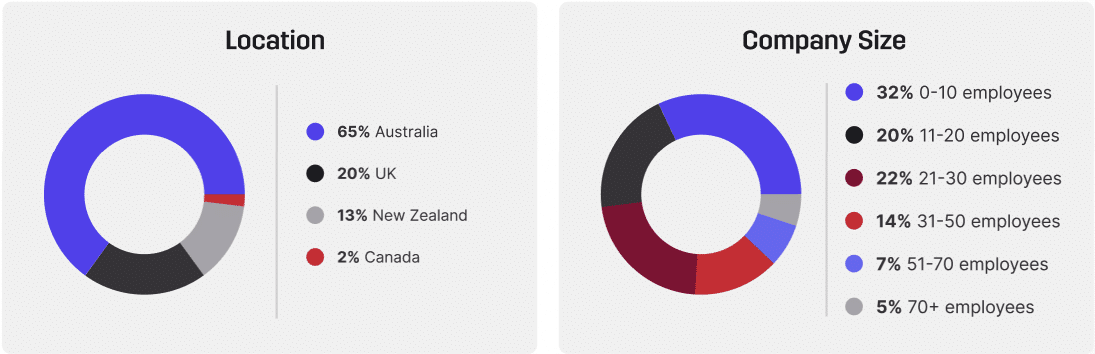
Practices of all sizes participated in the survey, from sole operators through to firms with more than 151 staff. Respondents selected all the sectors they work across, reflecting the breadth of work within each practice rather than a single primary specialisation.
Better workflows have never been more important in architecture.
In the last 12 months, the proportion of practices where teams are spending less than half their working day on design has nearly doubled.
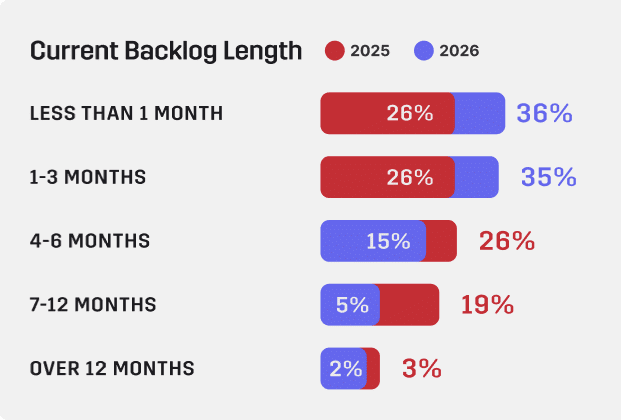
In 2025, nearly half of firms reported four or more months of backlog. In 2026, more than 70% of practices have three months or fewer, with more than a third sitting at less than one month’s worth of secured work. For a sector that relies on forward visibility to resource effectively, this compression in pipeline is a pressure point worth watching.
Firms that protect their design time with the right tools and more efficient workflows end up with more time for the work that matters.
Technology and AI was ranked as the number one most impactful trend shaping the architecture industry, with many exploring AI and using regularly using platforms or tools.
Where firms are using these tools, the returns are largely positive. The outlier is CRM software. Of the 24% of firms using it, only half report any meaningful efficiency gain, suggesting the sector has not yet found a consistent way to apply business development tooling to its workflows.
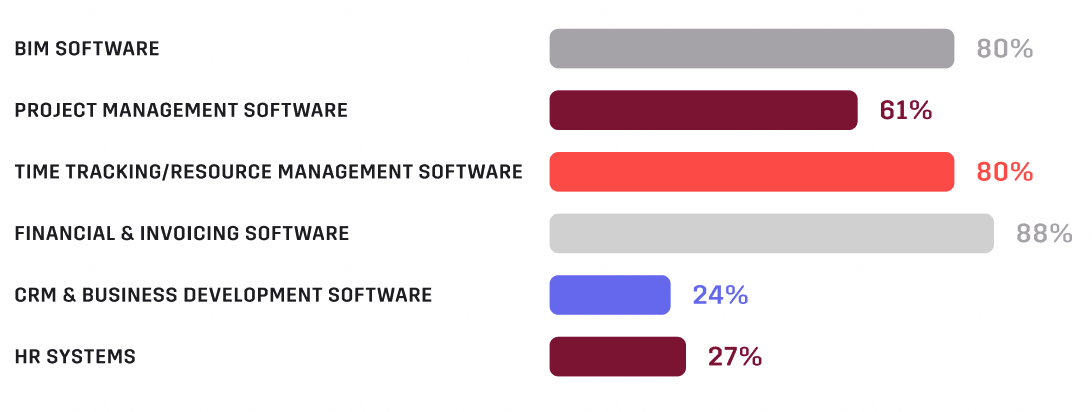
Firms that have built a connected technology stack are better positioned to manage the administrative load that is increasingly eating into design time. For those yet to close the gaps, the window for a measured, considered approach is narrowing.
Budget discipline has improved across the sector since 2025, but the headline number masks a more complicated picture.
More firms see fewer than 10% of their projects go over budget, but realisation rate remains one of the most under-tracked metric across firms.
There are also significant gaps in target profit margins and actual outcomes.
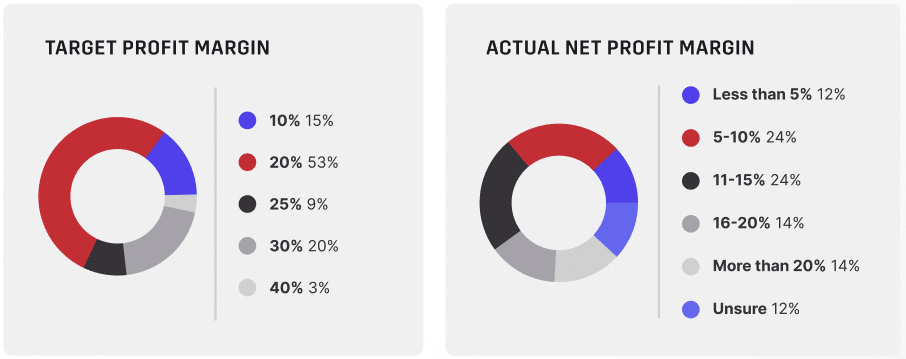
These figures are not out of step with industry norms, but they leave limited room for unexpected costs, fee write-offs, or delayed collections. The firms best placed to close the gap between target and outcome are those that have built visibility into their numbers at every stage of the project lifecycle, not just at the end.
Architecture firms are finding a balance between project demand, career growth, and talent retention.
More firms are now using professional development as a retention strategy, with career development pathways in architecture firms more common.
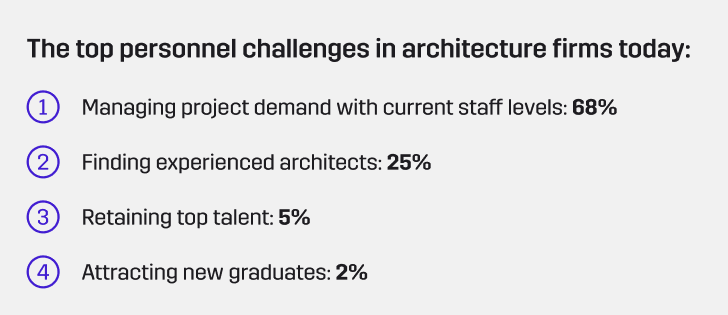
Firms that build structure around career growth and people management are not just improving retention. They are building the kind of organisational resilience that holds up when pipelines tighten and the pressure to do more with the same team increases.
The firms with the clearest financial visibility tend to have tracking embedded in the same platform where project work actually happens.
When that data lives in a spreadsheet updated weekly, or in a project manager’s head, the window for catching a cost overrun early narrows considerably, and so does the ability to make resourcing decisions based on facts rather than estimates.
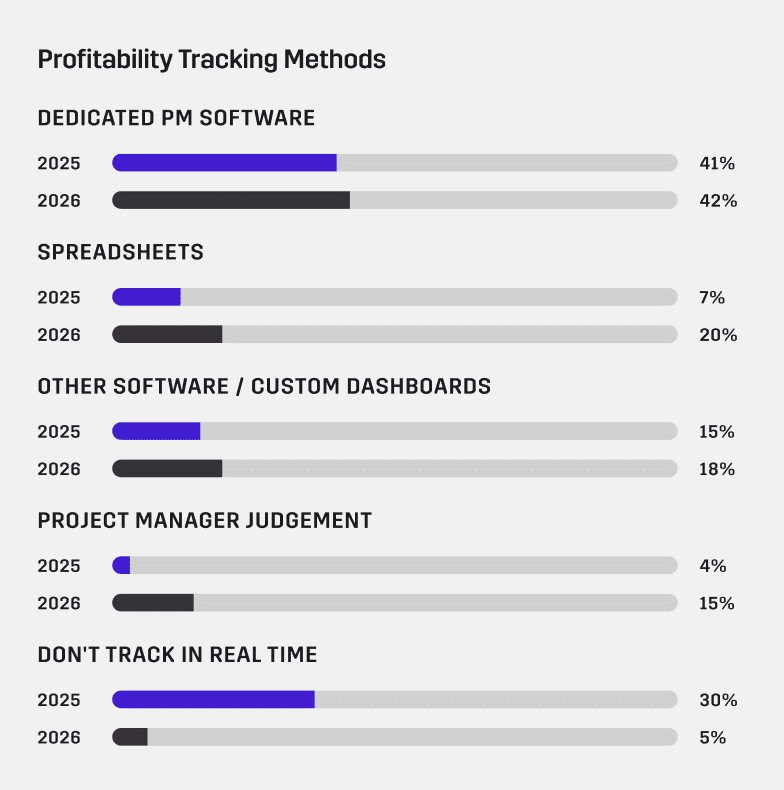
In practices where workloads are uneven and pipelines are uncertain, staff get overbooked, available capacity goes unaccounted for, and the cost of getting it wrong compounds quickly.
Dedicated project management software gives firms a single place to see how people, budgets, and timelines are tracking across every active project, turning a problem managed by instinct into one that can be managed by data.
In a market where pipelines are shorter and work is harder to win, firms are becoming more deliberate about how they generate leads, with referrals being the most common way to generate new business.
For the majority of firms, over 50% of their clients are repeat customers, yet few are using a proper system to manage client relationships.
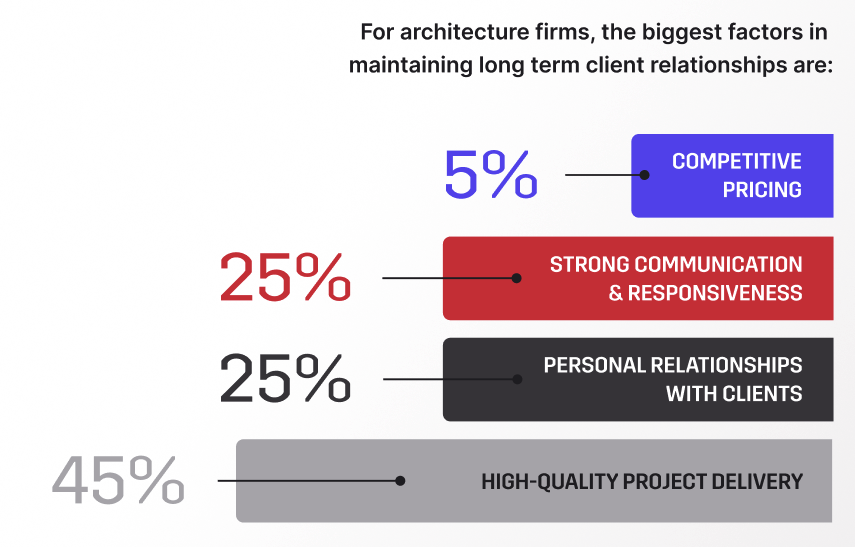
Despite challenges around fee pressure, more than half of firms are looking to grow, whether that be geographically or diversifying into new markets and services.
The year ahead looks uncertain for many architecture firms. Economic conditions remain the dominant concern, and the pace of technological change is adding a new layer of pressure to an already demanding environment.
But alongside the challenges, there are clear opportunities, and firms are finding ways to adapt.
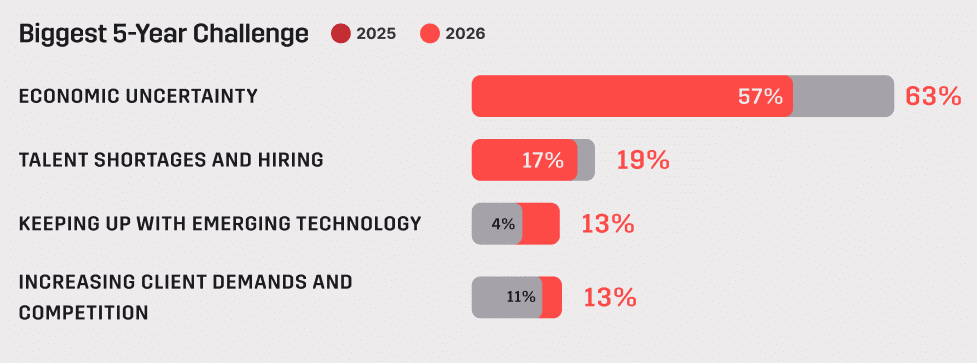
Firms pointed to opportunities in sector niches including defence, aged care, indigenous care, and residential housing, as well as in regional markets experiencing construction-led growth.
The firms most optimistic about the next five years are those actively building the internal capability to move when the market does, and that starts with having accurate, real-time data to act on.