
If you think you can’t scale without being in a growth phase, you’re not alone. But in the current market, firms that do more with what they have will be more resilient as a result.
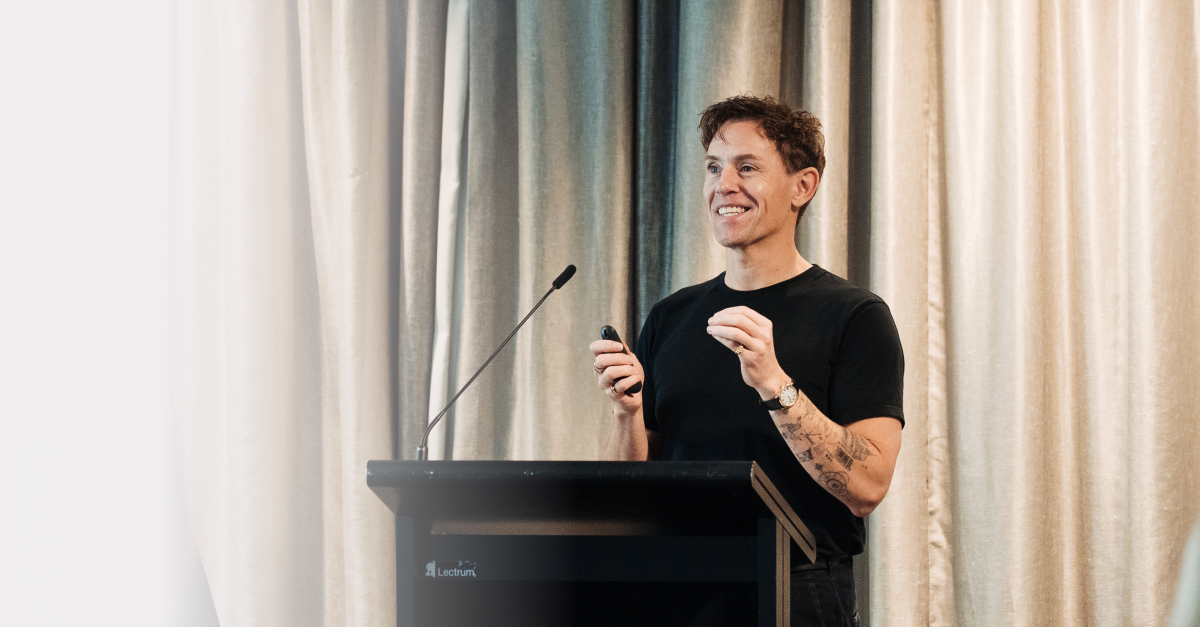
As part of the ACE New Zealand SME Summit, we walked firms through practical strategies to scale their businesses without compromising quality or workflow.
The market right now isn’t a growth story. According to ACE NZ member sentiment data, 31% of firms feel less confident about the next 12 months, 27% report no confidence at all, and 42% are seeing a slow pipeline. At the summit, pipeline was the number one concern in the room.
“Most talks about scaling assume you’re in a growth phase. Pipeline is strong, the team is stretched, and you’re trying to keep up. That’s not the story I’m hearing from engineering and architecture practices across New Zealand right now.” – Scott Bampton, Product Marketing Manager, Total Synergy
Growing vs Scaling
For architecture and engineering firms, growth means adding more staff, more tools, and generally spending more. Scaling, on the other hand, is getting more out of what you’re already putting in.
Scott Bampton, Product Marketing Manager at Total Synergy, has seen firms mix up the two, which can be an expensive mistake.
Take two firms as an example: Firm A hires a business development person to improve pipeline, then a graduate when capacity feels stretched. Revenue (and stress) goes up, yet the principal is still across everything because the proper systems and processes were never put in place.
Firm B also sees a shrinking pipeline but decides to do more with what they have. They find that 30% of senior staff time is going to rework, chasing approvals, and managing undocumented scope, and fix their system, resulting in better margins with the same headcount.
Firm A grew, and Firm B scaled.
“The difference isn’t talent or ambition. It’s infrastructure.” – Scott Bampton
Are Your Processes Fit to Scale?
Before scaling, firms need to take a closer look at three key areas: visibility, process, and financial discipline.
Scott has found that visibility is the most fundamental, and leaders should be able to answer the following questions:
- Do you know your billable utilisation rate by person, right now, without opening anything?
- Do you have committed work mapped out for the next 90 days?
- Can you tell, without looking, which active projects are running over budget?
Low visibility is common in smaller firms, where things are managed on gut-feel and instinct.
Process is where growth quietly falls apart. Are there documented processes in place for new hires, or could a mid-level person run a project without checking in constantly? In most small firms, the honest answer is no.
The principal ends up being the quality check, the institutional memory, and the onboarding programme all rolled into one. And that’s fine, until it isn’t.
Financial discipline, although often overlooked, is also an important part of being able to scale sustainably. The question isn’t whether you’re winning work. It’s whether your fees are built on real hours at real rates, if invoicing is structured in before a project starts, or figured out as the project progresses, and whether you know your breakeven rate.
“Low-discipline firms are often busy firms. They mistake activity for health.” – Scott Bampton
Across all three areas of practice, symptoms show up long before the root cause becomes obvious: budget overrun, reactive resourcing, burnout and strong revenue combined with weak cash flow. Getting these areas right before starting to scale means firms can increase their profitability and resilience.
Where To Start: Small Moves With a Real Impact
For firms looking to scale, improving their processes doesn’t need to be a huge task. It can be as simple as checking a few metrics once a week.
A starting point to fix low visibility is to check three numbers, every Monday: billable utilisation target versus actual by person, pipeline in weeks of committed work (below six weeks is a warning), and a red, amber, or green status for every active project.
For better processes, skip the operations manual. Scott’s picks for five SOPs to have in place before the next hire are: project brief sign-off, scope change protocol, weekly project status format, invoice trigger checklist, and new client onboarding sequence. Videos or audio recordings of processes or tasks can also be used time and time again.
Three changes can make all the difference for better financial discipline and cash flow: upfront deposits of 10 to 20%, monthly progress invoicing on longer engagements, and invoice triggers so the invoice goes out the day a milestone is hit.
“The firms that look back at this period as the year things changed won’t be the ones that waited for the market to recover. They’ll be the ones that used the quieter months to build the infrastructure they never had time to build when they were running flat out.” – Scott Bampton
Scaling Sustainably With Total Synergy
The firms that get their visibility, process and financial discipline right now won’t just survive the current market. They’ll be the ones who hit the ground running when it turns.
Headquartered in Sydney, Australia, Total Synergy has been built specifically for A&E practices for over 25 years and gives practices the visibility, process infrastructure, and financial clarity to scale without the friction. It brings together time tracking, resource planning, project budgets, WIP, and financial dashboards into one connected platform.
Book a demo to see how Total Synergy gives your firm the visibility it needs to scale with confidence.