

TL;DR: The best project tracking software for architecture firms includes Total Synergy, Asana, Monday.com, Smartsheet, ClickUp, Wrike, Airtable, and Teamwork.com. The right solution depends on whether your firm needs task management only or full project financial visibility with budgeting, time tracking, and resource planning.
Every architecture firm is managing multiple projects at once. Deadlines shift, budgets stretch, and team members juggle competing priorities. Without the right project tracking software, small problems quietly become expensive ones.
The good news: there are purpose-built and widely adopted tools that can help firms stay on top of scope, budgets, resources, and timelines. Here are our top 8 best project tracking software tools for architects.
What To Look For in Project Tracking Software For Architecture Firms
Not all project tracking tools are built the same. For architecture firms, the best solutions do more than organise tasks. They connect time, budget, and resource data in one place so your team can act early, not after the damage is done.
Features to look for when evaluating your options:
- Budget tracking at the project and phase level
- Timesheet integration so labour costs update in real time
- Resource planning to manage team capacity across projects
- Reporting and dashboards that give you project health at a glance
- Integration with accounting software like Xero, MYOB, or QuickBooks
Top 8 Project Tracking Software Options For Architects
1. Total Synergy
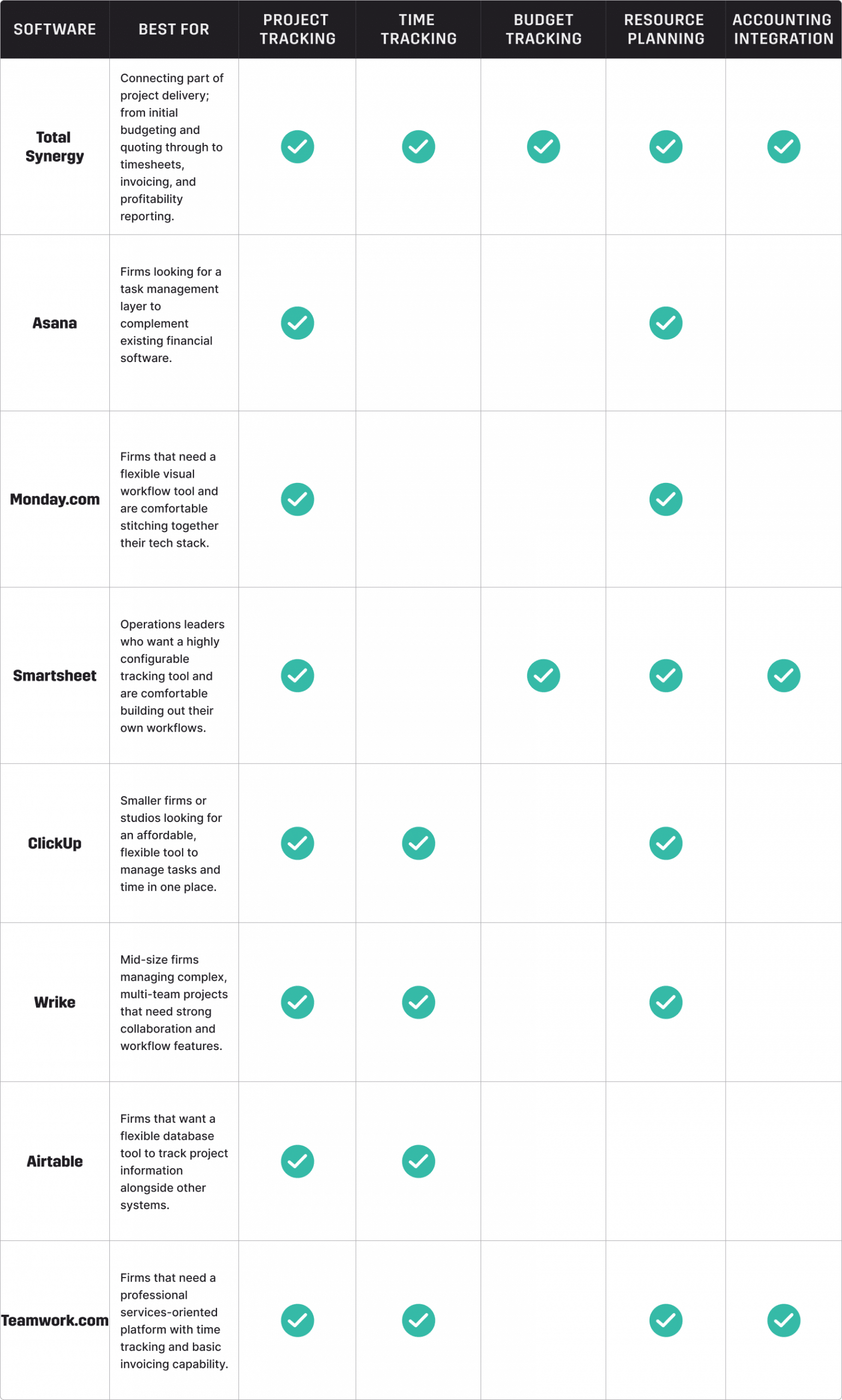
Total Synergy is a project management and financial platform purpose-built for architecture firms. Unlike generic project tools, it connects every part of project delivery; from initial budgeting and quoting through to timesheets, invoicing, and profitability reporting.
What it does well for architecture firms:
Project budgeting and quoting: Build detailed budgets using staff costs, consultant fees, contractor rates, and expenses. Set up project phases and fee stages from the start, so your team always knows what they have to work with.
Real-time budget tracking: As your team logs time and expenses, the project financials update automatically. Project managers can see budget burn at the phase level, not just the project level, so they can act before problems escalate.
Timesheets and time tracking: Staff can log time against specific tasks and phases directly in the platform, using daily timers or weekly timesheets. Time entries flow directly into project costs and invoicing, removing the need for manual reconciliation.
Resource planning: Allocate staff across projects, view capacity across the firm, and identify conflicts before they affect delivery. The resourcing module gives you a clear view of who is available, who is stretched, and where the gaps are.
Gantt charts and task management: Visualise project timelines, set milestones, and assign tasks to team members. Track progress without chasing status updates.
Revenue forecasting: See projected revenue by project stage and timeline, so leadership always has a forward-looking view of the business.
Invoicing: Generate invoices based on milestones, fixed fees, or time and expense, and push them directly to Xero, Quickbooks or MYOB.
Reporting and analytics: Pre-built dashboards for projects, finances, and people give your leadership team the real-time visibility they need to make confident decisions.
2. Asana
Asana is a task and project management platform used by teams across many industries. It offers timeline views, task dependencies, and team collaboration features that work well for tracking project milestones and workstreams.
For architecture firms, Asana handles task and workflow management competently. But it doesn’t track project budgets, manage timesheets natively, or connect to accounting platforms in a meaningful way. Firms will likely still need separate tools for time tracking and invoicing.
Best for: Firms looking for a task management layer to complement existing financial software.
3. Monday.com
Monday.com is a visual work operating system that supports project timelines, task assignments, and basic status reporting, with a large library of integrations and automations.
Like Asana, Monday.com is not purpose-built for architecture. It lacks native project budgeting, timesheet management, and the financial visibility that principals and project managers in architecture and engineering practices typically need. It works best as a team coordination tool rather than a full project management solution.
Best for: Firms that need a flexible visual workflow tool and are comfortable stitching together their tech stack.
4. Smartsheet
Smartsheet combines the familiarity of a spreadsheet interface with project management functionality. It supports Gantt charts, resource views, dashboards, and workflow automation, and integrates with a wide range of other platforms.
For architecture firms, Smartsheet is a flexible tool that can be configured to track project milestones, budgets, and team assignments. But most firms will need to build and maintain custom templates to get meaningful architecture-specific outputs.
Best for: Operations leaders who want a highly configurable tracking tool and are comfortable building out their own workflows.
5. ClickUp
ClickUp is an all-in-one productivity platform that covers tasks, docs, goals, Gantt charts, time tracking, and dashboards within a single product. It is known for its high level of customisation and a broad feature set at a relatively accessible price point.
For architecture firms, ClickUp offers more out of the box than most generic task tools. However, it is not designed around architecture project financials, does not offer purpose-built budgeting or invoicing, and can become complex to configure and maintain for firms with multiple active projects.
Best for: Smaller firms or studios looking for an affordable, flexible tool to manage tasks and time in one place.
6. Wrike
Wrike is a collaborative work management platform designed for professional services teams. It offers project tracking, resource management, time tracking, and reporting features, with strong workflow automation capabilities.
For architecture firms, the gap is in the financial layer: Wrike does not provide purpose-built budgeting, WIP management, or accounting integrations that the sector requires.
Best for: Mid-size firms managing complex, multi-team projects that need strong collaboration and workflow features.
7. Airtable
Airtable is a database-driven platform that sits between a spreadsheet and a project management tool.
For A&E firms, Airtable can work well as a lightweight project register or data management layer. It is not a financial or resource management platform, and building A&E-specific workflows requires significant setup and maintenance effort.
Best for: Firms that want a flexible database tool to track project information alongside other systems.
8. Teamwork.com
Teamwork is a project management platform with features tailored to professional services, including time tracking, client management, invoicing, and resource scheduling. It positions itself specifically at agencies and client-service businesses.
Compared to generic tools, Teamwork has more of the financial building blocks architecture firms need. However, it’s not built for architecture or engineering specifically, so lacks architecture-specific budget structures, phase management, and the deeper financial reporting that practices rely on.
Best for: Firms that need a professional services-oriented platform with time tracking and basic invoicing capability.
Why Purpose-Built Matters For A&E Firms
Generic project tracking tools can handle tasks and timelines. But architecture projects have specific demands: multi-phase fee structures, consultant cost management, WIP tracking, utilisation rates, and accounting integrations that need to reflect the way architecture contracts actually work.
Headquartered in Australia, Total Synergy has been built specifically for A&E practices for over 25 years. The result is a platform that reflects how architecture firms actually work, from the first budget estimate through to the final invoice. Total Synergy is trusted by 18,000+ users across more than 20 countries, with 24/7 support teams in Sydney and London.
If your firm is ready to move beyond spreadsheets and disconnected tools, book a demo with Total Synergy and see what purpose-built project tracking looks like in practice.