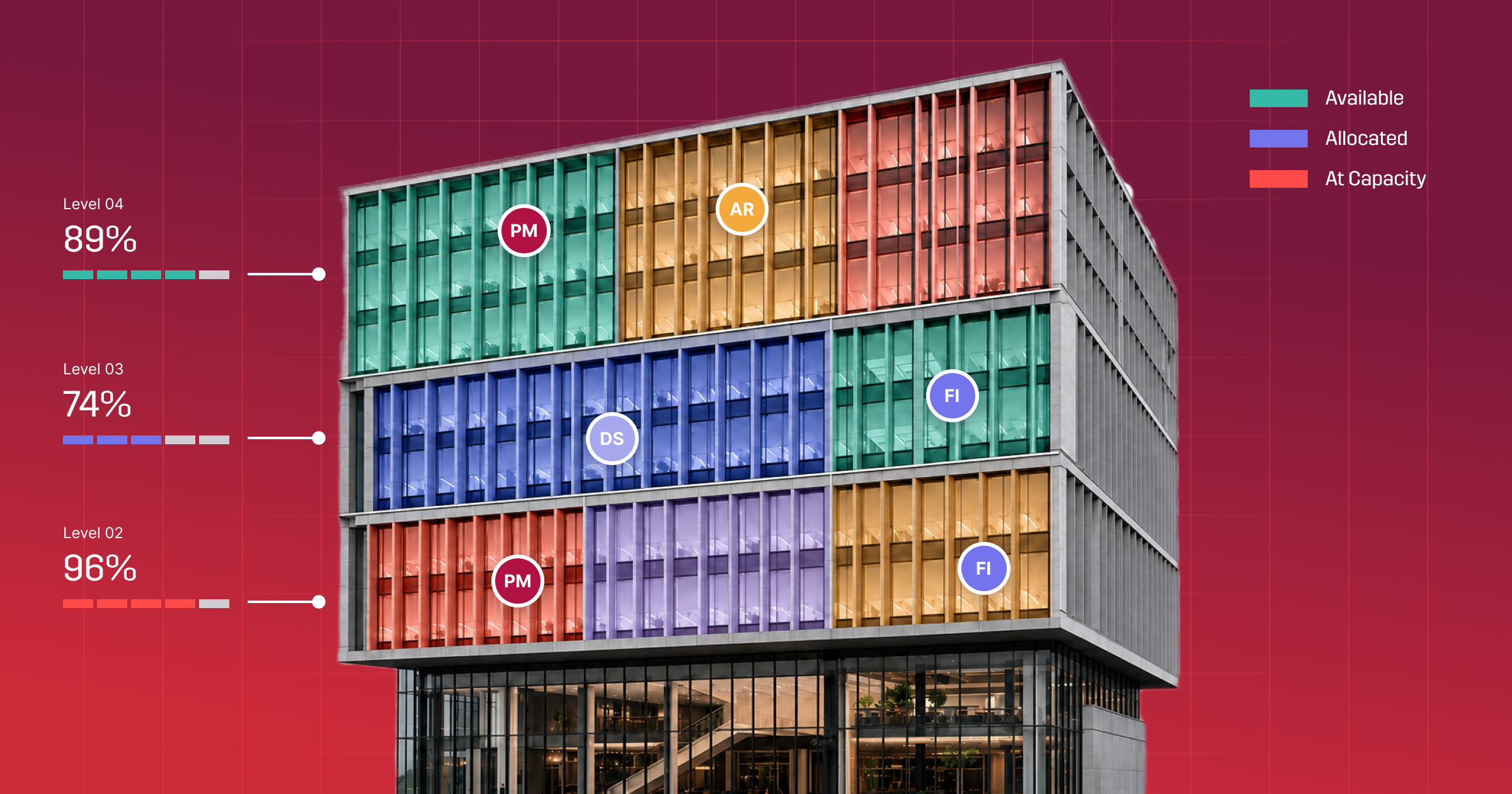
Every operations leader in an architecture or engineering practice knows the challenge. A new project comes in, but nobody can say for certain who actually has capacity to take it on.
Capacity planning should answer that question. But in many firms, it still relies on someone’s memory rather than a system the whole practice can see.
The result is a familiar pattern. Senior staff carry the heaviest load because they are the safest bet, while junior team members have capacity that goes unused. Neither situation helps your firm. Overworked staff burn out and start missing deadlines, and underused staff represent capacity you’re already paying for but not billing.
Effective capacity planning helps your firm take on the right amount of work, with the right people, without relying on guesswork.
What is Capacity Planning For Architecture and Engineering Firms?
Capacity planning is about understanding how much delivery capacity your firm has and how much is genuinely available for new work. It looks across the whole practice, rather than at a single project or a single person.
It’s closely related to resource planning, but the two aren’t the same. Resource planning is about matching specific people to specific tasks on specific projects. Capacity planning sits a level above that. It answers the bigger question of whether the firm as a whole has room to take on the next project, and what that decision means for the work already underway.
Workload planning then brings the two together at an individual level, spreading tasks so no one person is carrying more than their fair share while others wait for work. A firm can have plenty of spare capacity on paper and still have an overloaded senior architect, if that capacity isn’t distributed with any real workload planning behind it.
Why Capacity Planning is Significant for Project Delivery and Profitability
When capacity planning is weak, problems often appear too late. A project manager promises a delivery date without knowing that the team assigned to it is already stretched across two other jobs. By the time the shortfall becomes obvious, deadlines may have slipped and project margins may already be under pressure.
Total Synergy’s 2026 Engineering Industry Benchmark Report found that 59% of engineering firms are still using manual planning to manage resource allocation, and the 2026 Architecture Industry Benchmark Report found a similar picture, with 56% of architecture practices managing resource allocation manually or without any formal process at all.
While that approach may work for a small team, as a practice grows and manages multiple projects, deadlines and skill requirements, it becomes much harder to maintain an accurate picture.
Strong capacity planning changes the conversation. Instead of discovering an overload after it has already cost a weekend of unplanned overtime, firms can see it coming and act early, whether that means adjusting a timeline, bringing in extra support, or having an honest conversation with a client about scope.
Common Capacity Planning Mistakes A&E Firms Should Avoid
Treating Capacity Planning as a Headcount Exercise
Counting people doesn’t tell you how much work your firm can actually deliver.
A senior structural engineer and a graduate aren’t interchangeable units of capacity. They have different skills, experience and responsibilities.
Planning around headcount alone can lead firms to overcommit because it assumes every available hour can be used in the same way.
Relying on Spreadsheets and Verbal Updates
Spreadsheets go out of date the moment someone changes a deadline or takes unplanned leave, and by the time that change filters through to whoever owns the spreadsheet, the plan is already wrong.
Verbal updates create a similar problem. Information shared in a weekly meeting isn’t necessarily visible to everyone afterwards, making it harder for the wider practice to work from the same picture.
Ignoring Leave, Notice Periods and External Commitments
A capacity plan that only accounts for project work will always overstate what your team can actually deliver.
Annual leave, public holidays, training and external commitments all reduce the time people have available. If these factors aren’t included, you’re planning around capacity that doesn’t really exist.
Waiting Until a Project is Already Behind
Many firms only look closely at capacity once a project has visibly slipped. By then, the options are limited and usually expensive: unplanned overtime, a scramble to bring in contractors, or an uncomfortable call to the client.
Regular capacity reviews help identify smaller imbalances before they become major delivery problems.
Plan Team Capacity More Effectively with Total Synergy
For leaders in A&E firms, a practice-wide view of capacity can make all the difference in capacity planning.
Total Synergy delivers project management software built for architects and engineers, trusted by teams across Australia (AUS), New Zealand (NZ), and the United Kingdom (UK). Its resource allocation tools show where teams are overbooked or underused, while the Availability Planner accounts for leave and existing commitments. You can also filter by project or role to identify gaps before they affect delivery.
Instead of rebuilding the picture from scratch in a spreadsheet every week, leadership teams get a live view they can actually trust, alongside the time tracking and financial data that shows what that capacity is worth in practice.
To see how Total Synergy can help your firm plan capacity with more confidence and less guesswork, book a demo today.