
With continuously shifting forecasts, project dates that keep moving and mounting fee pressure, uncertainty is no longer a passing phase for leaders in architecture and engineering across New Zealand.
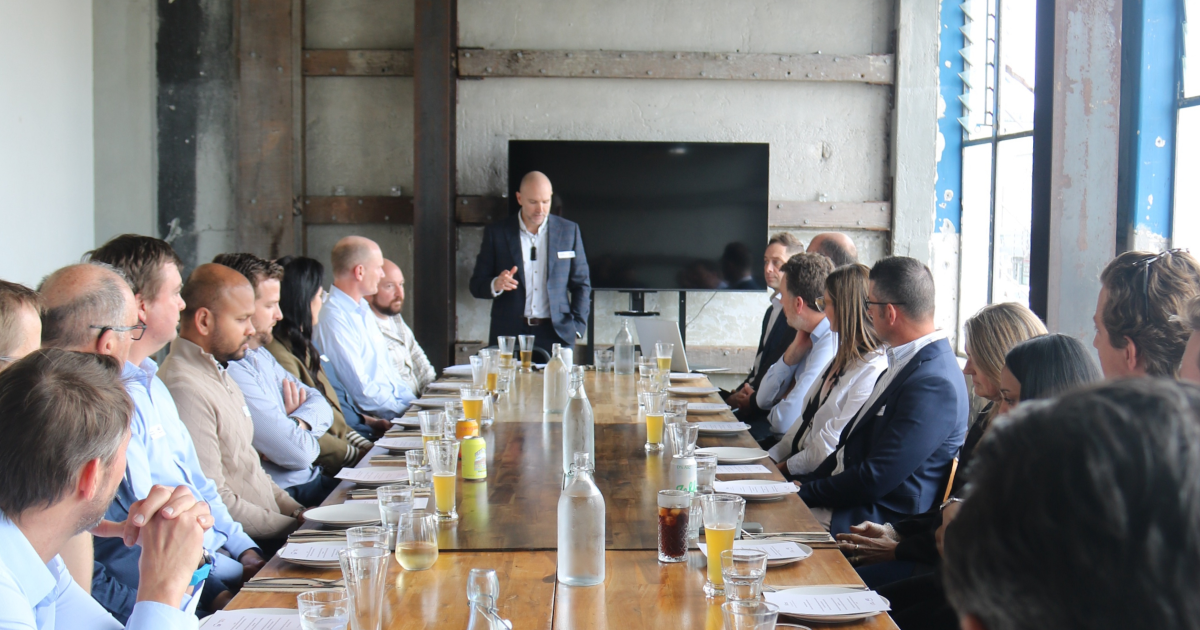
In partnership with ACE New Zealand, we recently brought together more than 20 consulting business leaders across A&E for an intimate roundtable, Clarity: Leading with confidence in an uncertain market. The room included managing directors, CEOs, operations leads and technical directors from a range of practices.
The discussion covered people, technology, market conditions, clients, procurement and succession. Here’s what we heard.
Challenge #1: A Continuously Shifting Market
Leaders said 2026 started with real momentum. Demand and pipeline sentiment were stronger through March, April and May. Then international uncertainty set in, especially for work exposed to fuel and energy costs, and confidence across the market softened.
Cut to now, and most leaders are cautiously optimistic. According to Stats NZ, the country consented 40,581 new dwellings in the year to June 2026. That’s up 21% on the 2024 trough but still 18% below the 2022 peak.
While that may look like a recovering market from the outside, leaders inside firms aren’t feeling that yet. Day-to-day, this lull looks like approved projects having delayed starts, government and client work continuously shifting, clients pushing harder on fees and firms bidding more often to win the same amount of work. Any improvements in the market show up in the data before upturn in pipeline.
The practical problem is forecasting. When government and client programmes keep shifting, planning resources months ahead gets tricky. With the general election on 7 November, some expect things to improve into 2027. Nobody agreed on when.
Challenge #2: Finding Experienced Talent
Talent is a key challenge for leaders in the New Zealand market. While many firms run strong graduate and intern programmes, a significant number struggle to find and keep architects and engineers with five to 10 years of experience.
Lots of applications also don’t mean lots of good candidates. Leaders asked a fair question: is this purely a market problem, or do culture, development and retention play a part too? Because every firm in the room had the same problem, the market looks like the main cause. Some firms are responding by taking on larger graduate cohorts, with an aim to develop stronger internal pathways to mid-senior capability.
Challenge #3: AI and the Future of Professional Judgement
AI is starting to take over tasks that have traditionally taught graduates the basics. As a result, this raises a long-term question for the profession: If juniors get fewer chances to build foundational skills, how many staff will have the experience needed to be able to check AI output?
During the roundtable discussion, several leaders noted that particularly in engineering, getting it wrong has serious consequences. AI-generated work still needs technical challenge, checked inputs and assumptions, and a professional who is accountable for it. A near-term capacity issue was also raised: senior engineers may end up reviewing both what AI produces and the information it was built from. Saving effort in one place can create pressure in another.
Challenge #4: Winning Work and Balancing Openness With Staff
Pipeline management now gets far more leadership attention than it did in previous, stronger markets. Proposal activity is up, and bidding for projects costs a lot when a big effort doesn’t win the job. Proposals that once led to work fairly easily now need to be sharper and more deliberate.
Leaders also described clients moving away from delivery certainty and timelines and towards value and lower cost. The challenge is showing how good advice improves decisions and outcomes across the whole project, so firms aren’t competing on price alone. Public-sector procurement was singled out as especially difficult. Centralised processes can be out of touch with how projects are actually delivered, and requests for information add cost for everyone.
Strong client relationships were the steady theme, and knowing what a client values before formal procurement begins is still one of the most useful advantages for firms.
That pressure also no longer stays in the boardroom. Firms are giving staff more visibility of workload and pipeline, and views across the room were mixed in terms of how open to be with staff. For some, visibility builds trust and reassures them about job security. For others, shifting forecasts create stress.
“Win as a team, lose as a team” was a principle the room supported. Leaders also agreed that openness needs context. Leadership’s job is to share information without passing raw uncertainty straight to staff. The room also noted that restructures can ease short-term cost pressure but can hurt culture and make future hiring harder.
Challenge #5: Succession Planning
The most searching question of the day was about succession. Can the business run well without its founder or key leader?
Readiness varied around the table, but the common thread was clear. Delegating with confidence depends on real-time visibility of projects, workload, utilisation, finances and pipeline. If only one person can see the full picture, this can result in a single point of failure for the firm.
From Hindsight to Foresight With Total Synergy
The roundtable pointed to five priorities for firms:
- Protect the graduate pathway as AI changes entry-level work
- Use AI with discipline so that review, challenge and professional judgement stay intact
- Treat the pipeline as a leadership discipline
- Compete on the value you bring clients rather than on the lowest fee
- Build enough leadership depth that the firm doesn’t rely on one person
Better data won’t remove uncertainty, but every one of these priorities depends on leaders seeing what’s happening across their projects, people and finances early enough to act.
The Total Synergy 2026 Engineering Industry Benchmark Report found that 87% of engineering firms say they track performance in real time. Only 49% do it consistently in one system. The report also found that 45% of firms don’t track their realisation rate at all, and 70% carry three months or less of backlog.
Usually the gap isn’t technology. It’s silos. Finance has one version of the numbers, operations has another, and there’s a spreadsheet built by someone who’s left. Total Synergy’s Insights Pro dashboards and our upcoming AI offering bring planning and actuals together so leaders can see problems coming while there’s still time to act.
If you’d like to see how clearer business information can support decisions at every level of your practice, book a demo now.
About Total Synergy (Australia)
Total Synergy is an Australian software company based in North Sydney, NSW, helping architecture and engineering practices across Australia improve project visibility, resourcing, and profitability with project management and practice management software. Try Total Synergy for free today and discover how the platform can transform your firm.